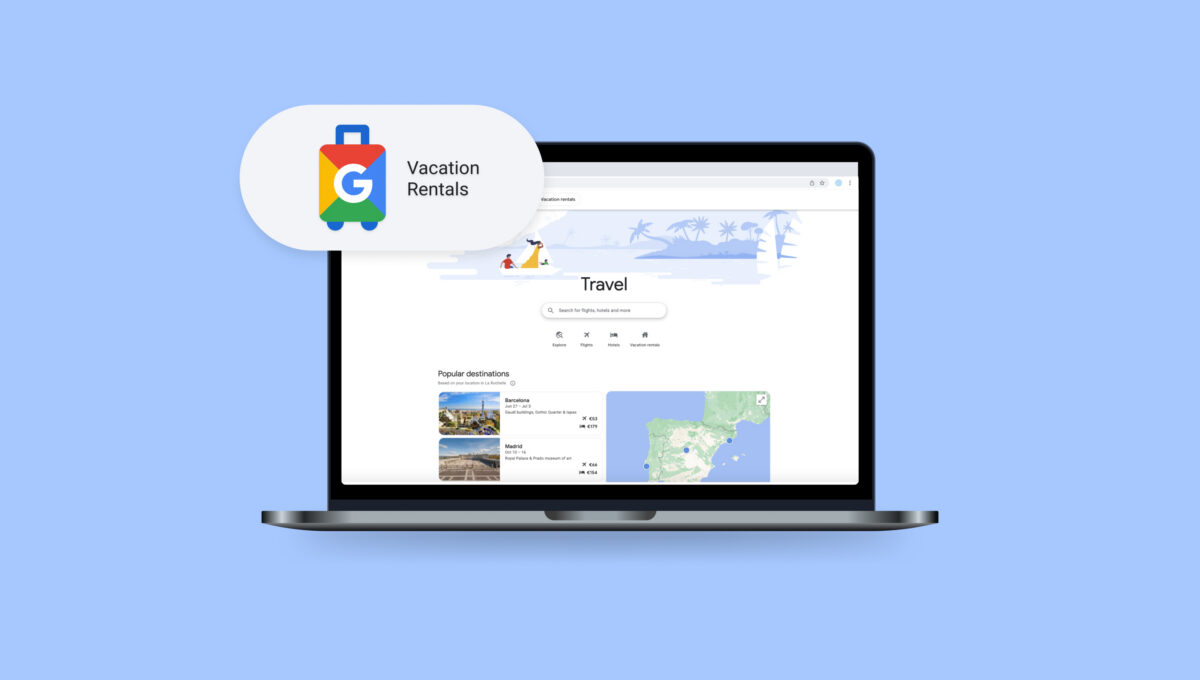
What Google’s Removal Of Vacation Rentals In The EEA Means For Hosts

If you have been following the latest industry news, you likely know that the European short-term rental market is experiencing a significant digital shift. On September 8, 2026, Google officially removed its dedicated Vacation Rentals search unit for users located in the European Economic Area (EEA).
While a change to a major search engine might sound intimidating at first, understanding the details is the first step toward adapting your distribution strategy. Our goal is to empower you with the knowledge and skills needed to successfully self-manage your properties and maintain high booking rates. Let’s explore what this change entails, why it happened, and how you can pivot to maintain a thriving business.
What Exactly Changed On Google?
Before this update, when a guest searched for "vacation rentals in Paris" or "apartments in Rome," Google displayed a visually rich, specialized search module at the top of the page. This unit highlighted prices, photos, and an interactive map, allowing guests to browse properties directly within Google Search.
As of September 8, 2026, this specific unit is no longer visible to searchers in the 27 EU member states, Iceland, Liechtenstein, and Norway.
However, it is crucial to understand what has not changed:
- Your Properties Are Still Online: This update only affects a specific discovery feature on Google Search. Your properties have not been banned, and your listings are still active across the web.
- Google Maps Remains Active: Vacation rentals will continue to appear on other Google platforms, including Google Maps and Google Hotels.
- International Guests Are Unaffected: The removal is based on where the guest is searching from, not where your property is located. Guests searching from the US, the UK, or any country outside the EEA will still see the Vacation Rentals search module as before.
Why Did Google Make This Decision?
This is a direct response to the European Union’s Digital Markets Act (DMA). The DMA aims to ensure fair competition by preventing major digital platforms (often referred to as "gatekeepers") from favoring their own services over competitors'.
Recently, the European Commission levied a €460 million antitrust fine against Google for self-preferencing its own travel and shopping modules in search results. To comply with the DMA’s strict regulations and avoid further penalties, Google opted to remove the free vacation rental search unit entirely in the EEA rather than redesigning it to include competitors. This shift empowers organic search results and forces major channels to compete on a more even footing for visibility.
What Does This Mean for Your Direct Bookings? On a more even footing
For independent hosts, the Google Vacation Rentals unit was a valuable channel for generating commission-free direct bookings. With its removal for European searchers, many hosts anticipate a short-term squeeze on distribution
Guests searching from within Europe are now more likely to click on the organic search results that follow, which are heavily dominated by major booking channels and comparison aggregators. This shift means that relying solely on Google Search for direct European traffic will no longer be enough. Hosts who proactively expand their visibility across a mix of platforms will secure a clear advantage moving forward.
How To Adapt Your Distribution Strategy
We believe in honoring tradition while embracing progress, and this is the perfect time to optimize your business for the future. Here are four actionable steps you can take today:
1. Maximize Your Channel Visibility
Because major channels are expected to capture a larger share of European search traffic, optimizing your presence on platforms like Airbnb, Booking.com, and Expedia is essential. Ensure your listings have high-quality photos, updated amenities, and competitive pricing. To avoid overbooking while listing on multiple sites, use a reliable Channel Manager. A Channel Manager automatically runs a channel sync across all platforms, saving you time and giving you peace of mind.
2. Strengthen Your Independent Website
Now is the time to invest in your own website. Focus on local Search Engine Optimization (SEO) to capture organic traffic. Start publishing blog posts about your local area, build backlinks, and ensure your website is mobile-friendly. Even without Google’s specialized module, a well-optimized website built with a dedicated Website Builder will rank well in standard search results.
3. Keep Your Google Feeds Running
Do not disconnect your properties from Google! Since the search module is still visible to highly lucrative markets outside the EEA—such as American and British guests—maintaining your connection ensures you do not miss out on international direct bookings. Furthermore, your feed will continue to populate your properties on Google Maps. If you are debating which platforms perform best globally, evaluating Google Vacation Rentals vs Airbnb will help you tailor your approach.
4. Diversify Your Marketing Efforts
Direct bookings do not just come from search engines. Expand your reach by leveraging email marketing to re-engage past guests. A loyal past guest is the easiest person to convert into a future direct booking. Additionally, focus on building a strong presence on social media platforms to showcase your properties visually and connect with potential guests.
Why Smoobu Is The Ultimate Solution For Navigating Platform Changes
As the digital landscape evolves, hosts need agile tools that empower them to remain competitive without increasing their workload. Smoobu is designed to provide you with a comprehensive suite of features that simplify property management across all your connected platforms.
With Smoobu’s centralized dashboard, you can confidently distribute your properties across major channels, ensuring your calendars stay perfectly synced. Our intuitive Website Builder equips you with the necessary tools to drive commission-free direct bookings independent of search modules. By centralizing your operations, from automated guest communication to dynamic pricing integrations, Smoobu guarantees that you remain resilient and ready for whatever the market brings.
Looking Ahead
The short-term rental landscape is always evolving, and this recent DMA compliance update is just another transition in the industry. By spreading your distribution across powerful channels, maintaining your own direct booking website, and targeting international guests, you can turn this shift into an opportunity for growth.