Google Vacation Rentals vs Airbnb: A 2026 Host Comparison
In the rapidly evolving short-term rental industry, 2026 has brought a new level of complexity. Every modern property owner and the savviest property managers know that relying on a single platform is a strategic vulnerability. While many local Hosts initially built their businesses around a single major site, the modern ecosystem demands a diversified strategy across multiple distribution channels to maximize revenue.
Today, two of the most critical booking platforms in the host community are Airbnb and Google Vacation Rentals.
While Airbnb is the household name that revolutionized peer-to-peer home sharing, Google Vacation Rentals has quietly evolved into a massive direct-booking powerhouse. Instead of acting as an online travel agency (OTA), Google leverages its dominance as a search engine to drive zero-commission direct bookings straight to your property management system. Understanding how these two giants differ structurally and financially is paramount.
In this comprehensive, deep-dive comparison, we will explore everything from algorithm mechanics and fee structures to guest demographics and channel management.
1. The Core Ecosystem: Closed Marketplace vs. Global Search Engine
To succeed on these platforms, you first must understand how their underlying technology works. They operate on two fundamentally different business models.
Airbnb: The Closed Ecosystem
Airbnb operates as a strictly closed marketplace. It is a traditional booking site where hosts list their properties, and guests come specifically to the Airbnb app or website to search. Airbnb controls the entire funnel: search, communication, payment processing, and dispute resolution. This closed loop enables Airbnb to offer integrated features like AirCover. However, it also means that if a guest doesn't open the Airbnb app, they won't find your property.

Google Vacation Rentals: The Massive Metasearch Platform
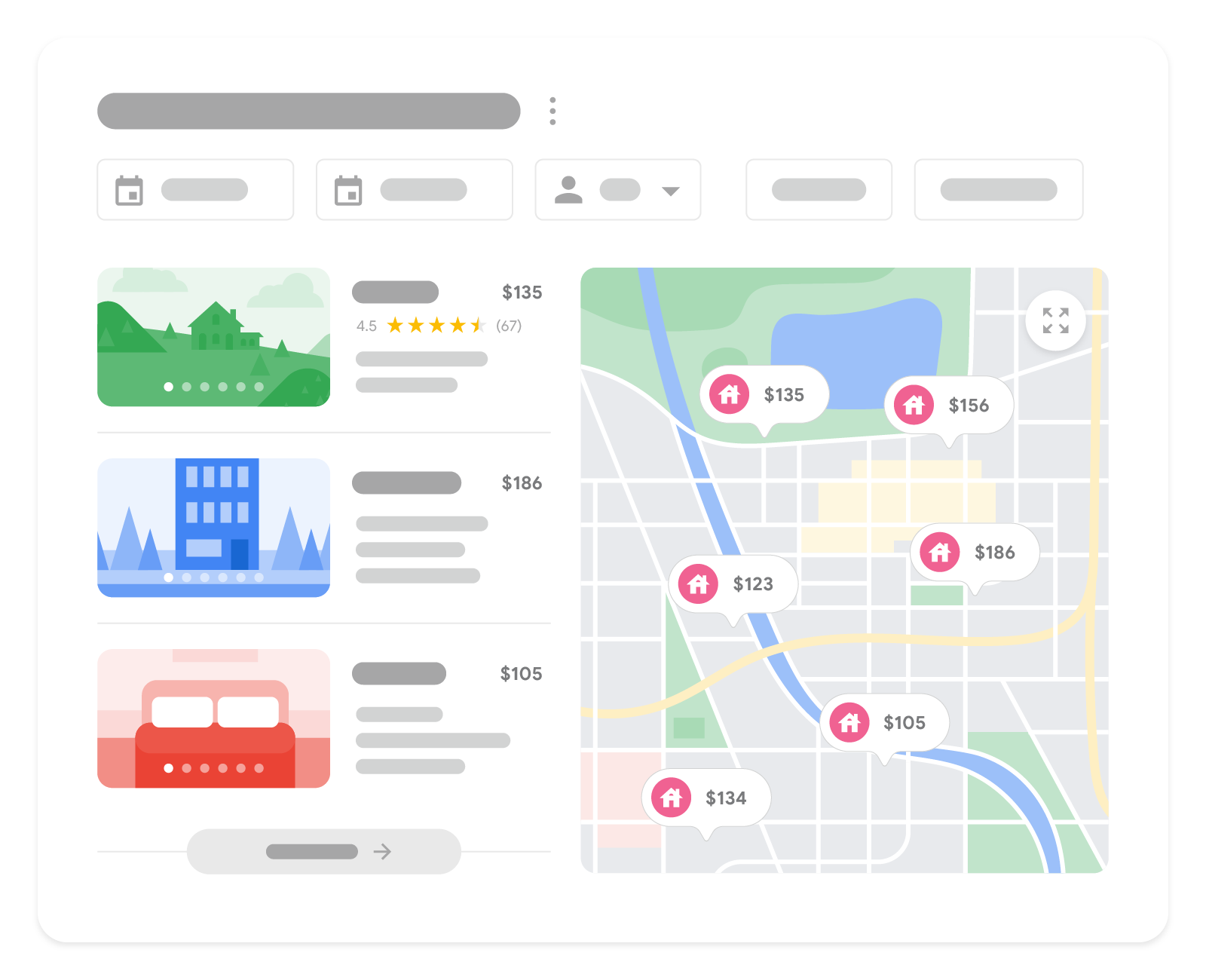
Google's origins in this space are entirely different. Google Vacation Rentals is part of the broader Google Travel suite (which includes Google Flights) and acts as a massive metasearch platform deeply integrated into Google Maps and standard Google Search results. Note: This is distinct from a standard Google My Business profile, which does not process lodging availability.
When a traveler searches for "cabins in Aspen", Google Vacation Rentals results pull listings directly to the top of the page via the dedicated Google Vacation Rentals tab. Instead of taking the booking itself, Google redirects the guest to complete the reservation on your direct booking website. For hosts, this is a game-changer: you capture Google's massive global audience while retaining total control over your margins.
2. Head-to-Head: 2026 Feature Comparison Table
Before we dive into the granular details, let's look at a high-level comparison of how these two platforms stack up for professional hosts this year.
|
Feature / Metric |
Airbnb |
Google Vacation Rentals |
|---|---|---|
|
Primary Business Model |
Direct Peer-to-Peer Marketplace |
Metasearch & Direct Booking Engine |
|
Guest Demographic |
Younger, experiential, digital nomads |
Universal (Anyone using Google Search) |
|
Average Booking Intent |
High (Browsing specific stays) |
Extremely High (Searching specific destinations) |
|
Host Commission |
3% Split Fee OR 14-16% Host-Only |
0% (Zero Commission) |
|
Guest Data Ownership | The host owns the data |
Host owns the data |
|
Integration Requirement |
Direct manual upload or via Channel Manager |
Channel Manager / API Partner strictly required |
3. Target Audiences: Aligning with User Intent
Aligning your property type with the right user intent is the secret to high occupancy.
The Airbnb Guest: Experiences and Flexibility
Airbnb guests often skew younger and are highly motivated by the "experience" of the stay. They use complex search filters to find unique architectural stays or specific amenities. Their booking decisions are heavily influenced by your guest ratings, and the booking window is generally shorter.
The Google Guest: High-Intent Destination Searchers
Google doesn't have a niche demographic—it has everyone. The user intent here is incredibly focused. Travelers often look at local tourism sites or type a destination into Google. Because Google places your listing next to local hotels and attractions, you reach travelers just as they decide where to stay, often securing bookings well in advance.
4. Fee Comparisons Across Booking Platforms
Understanding the commission structure is vital. In 2026, calculating your true Cost per Acquisition (CPA) is the only way to measure profitability. If you compare the landscape, you will see a vast difference in host costs:
- Airbnb Fees: Generally a 3% payment processing fee for the host (Split Fee model), or a flat 14–16% commission for software-connected hosts (Host-Only model).
- Vrbo Fees: Typically, an 8% fee per booking or a flat annual subscription.
- Booking.com Fees: Usually range between 15% and 18% per booking, depending on your region.
- Expedia Fees & Hopper Fees: Often sit in the 15% to 20% range for standard hotel and rental distribution.
- Homes & Villas by Marriott Bonvoy™ Fees: Generally higher (often over 15%) as it caters to a luxury, points-based loyalty demographic.
- Google Vacation Rentals Fees: 0% Commission. Google acts as a redirect to your own site, so your only costs are standard credit card processing fees (like Stripe) and your software subscription.
5. Host Protections and Operational Risk Management
When a guest damages your property, the platform you chose matters immensely.
Airbnb: The Safety Net
Airbnb offers AirCover, providing up to $3 million in damage protection. They handle basic guest communication tracking, mediate disputes, and enforce policies. For new hosts, this safety net provides incredible peace of mind.
Google Vacation Rentals: Professional Independence
Google is simply the matchmaker; they do not mediate disputes or provide damage protection. Because the guest books directly with you, you are operating as an independent business. You must utilize your own guest screening protocols, secure your own short-term rental insurance, and enforce your own cancellation policies.
6. Search Engine Optimization and Visibility Mechanics
To succeed, you must know how to feed these search engines exactly what they want.
Optimizing for Airbnb
Airbnb's algorithm favors engagement. If guests save your property to their wishlists, your ranking skyrockets. Instant Booking must be turned on to remain visible, and maintaining a rating above 4.8 is critical.
Optimizing for Google Vacation Rentals
Because Google is a true search engine, it relies heavily on proper search engine optimization, pricing parity, and proper landing pages. Furthermore, as your direct website gains domain authority, your overall organic visibility improves, as does your Google Vacation Rentals visibility.
7. The Tech Stack: Why Smoobu is the Ultimate Solution
In 2026, relying solely on Airbnb is a strategic risk. Diversifying your channels is essential, and keeping your availability synced across all of them is non-negotiable. If you secure a booking originating from a Google search, those dates must be blocked on Airbnb instantly.
This brings us to the most critical operational tool in your tech stack: your property management system (PMS) and channel manager.
- Flawless Calendar Synchronization: Smoobu syncs your availability data across multiple platforms (such as Airbnb, Booking.com, and your direct website) in real time, effectively eliminating double bookings.
- The Google Connection: You cannot manually upload a property to Google's travel ecosystem. Smoobu handles your Google visibility seamlessly through its official HomeToGo integration via Google Vacation Finder. Your listings and photos are syndicated to Google search results through HomeToGo. When a guest books via Google, the reservation is processed by HomeToGo (which qualifies for a special 3% host-only fee for API-connected Smoobu users) and is instantly synced to your Smoobu calendar. (Note: This is currently unavailable for U.S. hosts using HTG US.
- Automated Messaging: Streamline your guest communication—whether guests booked via Airbnb, HomeToGo (originating from Google), or your own direct booking website—using Smoobu's unified inbox.
Conclusion: Your 2026 Action Plan
The debate between Google Vacation Rentals vs Airbnb is not about finding a single winner; it is about leveraging both to build a comprehensive revenue machine. Use Airbnb to capture mobile-first, experience-driven travelers, and Google Vacation Rentals to capture high-intent search traffic, maximizing your margins with zero-commission direct bookings.
Efficiency is the difference between a stressful side hustle and a highly profitable business. Take control of your distribution today by connecting your properties to Smoobu.
Leave a comment
Your email address will not be published.