
Airbnb SEO Decoded

TL;DR: The Fundamentals Of Vacation Rental SEO
- The Airbnb algorithm functions as a complex matchmaker, prioritizing user experience and behavioral signals over simple keyword matching.
- Your Click-Through Rate (CTR) and overall booking rate are massive performance metrics that dictate your listing rank.
- Technical foundations—such as a reliable property management system, accurate guest filters, and complete listing details—are essential for optimal search engine optimization.
- Avoid a Low Conversion Rate by using professional photography, dynamic pricing software, and fast-response automation.
- Check out the Q & A at the bottom of this guide for reader questions and actionable real-talk advice.
Beyond Keywords: Understanding The Search Ranking Formula
To succeed as a host today, you must stop viewing the hosting portal as a simple, static directory. If you treat Airbnb the way you might have approached Google a decade ago—obsessing over keyword density analysis and external backlinks—you are completely missing the mark. Our goal is to empower users with the knowledge and skills needed to successfully self-manage their properties. Understanding this specific search ranking formula is the absolute first step toward achieving total operational independence.
The system is a sophisticated, machine-learning-driven matchmaker. Its primary operational goal is to maximize the Gross Booking Value (GBV) by pairing the right guest with the perfect property. Through continuous SEO experiments, the platform evaluates your host's performance in real time. It actively adjusts your search visibility based on how well your vacation rental aligns with a traveler's specific, immediate needs at the exact moment they press search.
Why Platform SEO Differs From Traditional Search Engine Optimization
Google prioritizes the relevance of information to accurately answer a user's question. Airbnb prioritizes the likelihood of a successful conversion to secure a financial transaction. On traditional search engines, you optimize for traffic volume. On Airbnb, you must optimize exclusively for the guest experience.
The algorithm does not reward keyword stuffing in your titles or descriptions. While a standard local website cares deeply about domain authority or setting up active Google Business profiles, Airbnb cares entirely about your internal ecosystem metrics. It evaluates your local market data, your message response times, and the tangible quality signals gathered from past guests to determine your ultimate ranking.
The Three Phases Of The Airbnb Search Ranking Process
To effectively streamline and automate your hosting tasks, you need to understand in depth how the platform filters and sorts its massive database. The search process occurs in three distinct, rapid phases whenever a user executes a query.
Phase 1: Pre-Filtering (Meeting Guest Filters)
Before a guest even sees a list of potential properties, the algorithm applies a hard, non-negotiable filter based entirely on the user's selected guest filters. If your property does not meet the user's basic criteria—such as minimum stay requirements, specific cancellation policies, or a pet-friendly environment—you are removed from consideration entirely. You cannot outrank a hard filter.
This is why technical listing optimization is the undeniable foundation of your success. If you purchase a brand-new crib for traveling families but fail to check that vital box in your backend settings, your property instantly becomes invisible to parents who require that specific feature. To ensure you never miss out on these filtered searches, every host should conduct a routine Listing Completeness Audit using this step-by-step checklist:
- Step 1: Walk the Property. Physically walk through your vacation rental with a notepad. Write down every single appliance, safety feature, and comfort item available to the guest.
- Step 2: Cross-Reference the Dashboard. Log in to your hosting dashboard and open the amenities section. Compare your physical list to the digital checkboxes. Did you check "Dedicated Workspace" just because you have a kitchen table? (Don't do this—it leads to bad reviews. Did you forget to check "Coffee Maker" even though you have a high-end espresso machine? Correct these discrepancies immediately.
- Step 3: Update Seasonal Amenities. If you have a pool that closes in the winter, ensure you update your listing details seasonally to avoid setting false expectations. Accuracy prevents cancellations and protects your listing rank.
- Step 4: Audit Accessibility Features. Carefully document any step-free entrances or wide doorways. These are highly sought-after filters that face low competition.
Phase 2: The Ranking Model (Analyzing Listing Quality)
Once the massive pool of potential properties is narrowed down through pre-filtering, the platform's ranking model takes over to comprehensively assess Listing Quality. It weighs hundreds of individual, microscopic signals, including your recent guest ratings, the verifiable presence of professional photos, and your historical response rate.
This is precisely where your true competitive edge is forged. The mathematical model calculates a unique "success probability" score for your property, essentially asking the machine: "If we show this specific guest this specific property right now, how likely are they to click on it, book it, and ultimately leave a five-star review?"
Phase 3: Personalization (Adapting To Behavioral Signals)
Because the platform places a high value on personalization, the algorithm continuously tailors search results to the guest’s search history and current behavioral signals. A business traveler viewing properties on a mobile device, looking for a quick overnight stay, will see vastly different results than a family planning a two-week summer holiday on a desktop computer. Your visibility is a fluid, highly dynamic metric that changes minute to minute. For a deeper, technical explanation of these personalized factors, you can review Search Results Mechanics directly on the Airbnb Help Center.
The Conversion Loop: Tracking Performance Metrics
Your long-term visibility and financial success are dictated by your property's conversion loop. The algorithm meticulously tracks your performance metrics from the initial search impression through the final checkout and review submission.
Click-Through Rate (CTR): The Power Of Professional Photography
Your Click-Through Rate (CTR) is a major algorithmic proxy for quality and desirability. High-quality professional photography and a clear, compelling listing title are your primary levers for instantly increasing your CTR. Specifically, your main cover photo must be captivating, perfectly lit, and easy to understand, especially when viewed on a much smaller mobile screen. These listing photos serve as an honest, beautiful preview of the experience, setting realistic expectations while enticing the hesitant guest to explore further.
Booking Conversion: Avoiding A Low Conversion Rate
The ultimate performance metric is the conversion from a simple click to a fully confirmed, paid reservation. Every time a guest views your property and successfully books, your booking rate skyrockets, sending an incredibly strong positive signal to the algorithm that your property is exactly what the market demands.
Conversely, a high view count paired with a Low Conversion Rate sends a disastrous negative signal. It suggests to the machine that your property may be vastly overpriced for the neighborhood, or that the interior photos do not live up to the lofty promise of the title. If you are currently experiencing this frustrating imbalance, utilizing dynamic pricing is your best corrective measure.
For example, if a major music festival is announced in your city, demand will temporarily spike. A static price means you will sell out immediately, leaving a lot of money on the table. Conversely, during a rainy off-season Tuesday, that same static price will guarantee your property sits empty. Dynamic pricing tools automatically lower your rates during slow periods to attract budget travelers and raise them during high-demand periods to maximize your profit margin. This fluid strategy ensures your conversion rate remains stable year-round.
To master this concept, read our Dynamic Pricing Guide to ensure your rates perfectly reflect current market demand.
The Hierarchy Of Ranking Signals And Listing Optimization
Not all ranking signals are created equal in the eyes of the machine. You must smartly focus your search engine optimization efforts and budget on the metrics that actually move the needle.
High-Weight Signals: Guest Ratings And Average Nightly Rate
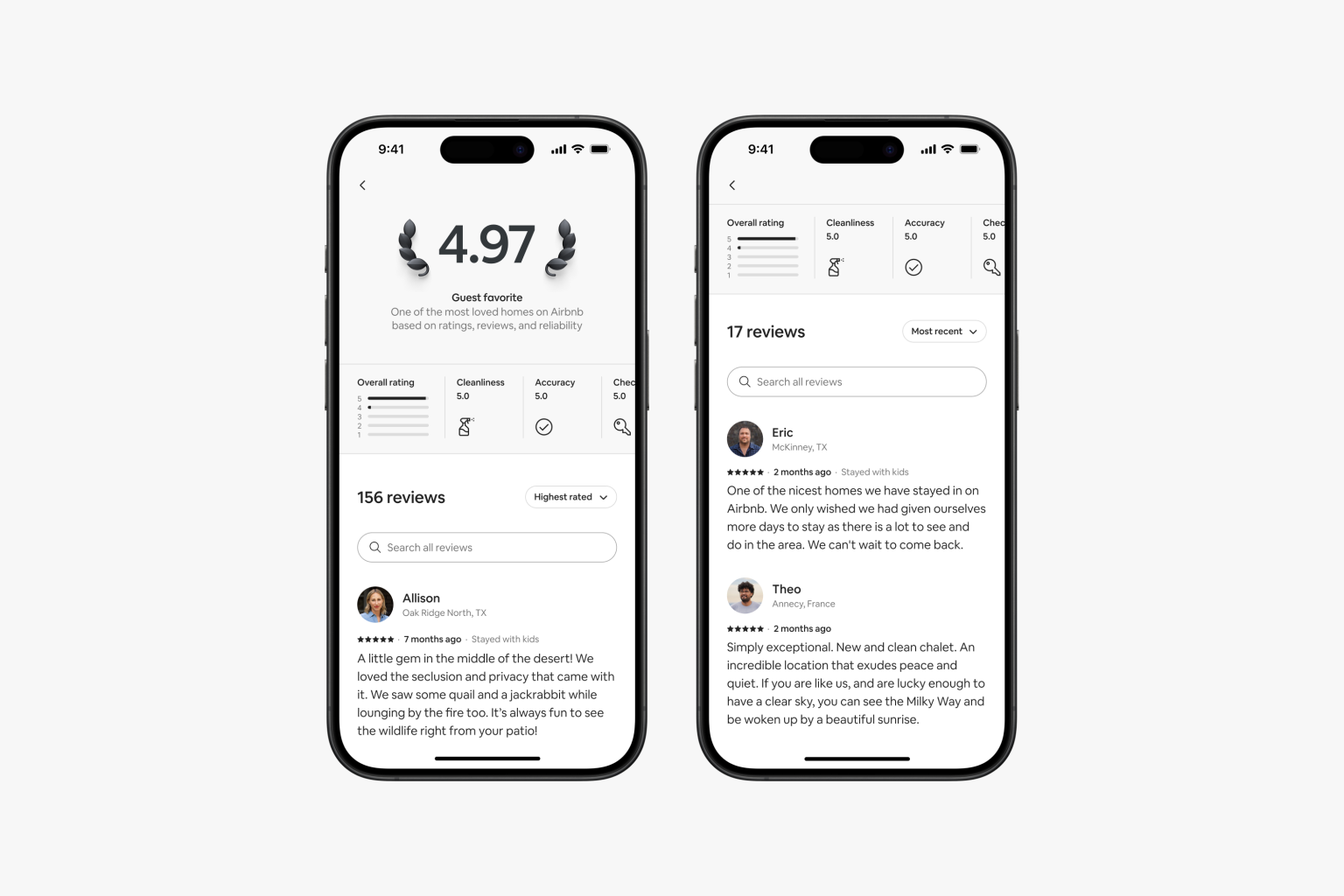
The heavy hitters in the algorithm actively and undeniably prove your value to the platform. Recent, overwhelmingly positive guest ratings provide the critical social proof necessary to convince hesitant travelers to book. Additionally, offering a highly competitive average nightly rate ensures your property remains the go-to choice compared to traditional hospitality competitors in your area.
Mid-Weight Signals: Superhost Listing Optimization And Response Automation
These crucial factors primarily serve to build trust between you and the platform. Superhost listing optimization ensures you maintain the strict metrics required to keep your badge, explicitly telling the algorithm you are a reliable, professional partner. But perhaps the most impactful mid-weight signal is your communication speed.
Consider the mathematics of manual messaging versus message automation. If you spend just five minutes manually typing out check-in instructions, answering common parking questions, and sending checkout reminders for a single guest, that seems manageable. But if you host 10 guests a month across 3 properties, you are suddenly spending over two and a half hours simply typing the exact same text over and over.
Implementing robust response automation reclaims hours of your life while ensuring your response rate remains at a perfect 100%. The algorithm heavily favors this fast, instant communication to ensure the guest feels deeply supported. To reclaim your time, read our guide on how to implement message automation effectively.
Low-Weight Signals: Descriptions And External Link Backs
While beautifully written property descriptions are vital for convincing human guests to book, the algorithm treats them as a secondary ranking factor. Do not waste valuable character space with flowery prose. Instead, focus entirely on clean, concise listing details. Furthermore, external link backs from travel blogs or social media posts do not directly impact your internal platform ranking; focus your energy and budget strictly on what happens inside the app.
Data-Driven Pricing As A Quality Proxy
Pricing is not simply a reflection of your desired income; it is a primary lever the algorithm uses to determine your overall value proposition and, in turn, your ultimate listing rank.
Utilizing Dynamic Pricing Software And Market Data
Using dynamic pricing software allows you to stay aggressively competitive effortlessly. A property that remains highly occupied even during traditional off-peak seasons is viewed by the algorithm as a massive success story. By automatically adjusting your prices based on complex, real-time market data, you mathematically maintain much higher occupancy levels. To gain a deeper understanding of broader market trends and how data impacts visibility, explore market analytics from industry data experts.
Maintaining Human Control
While the platform's built-in smart pricing exists, working with humans—or at least maintaining strict human oversight of your third-party pricing algorithms—allows you to confidently capture significantly higher rates during local events or surprise holidays.
Regularly analyzing real-time market data is essential to understanding how your specific neighborhood behaves. High performance requires proactive, thoughtful management, not simply a set-it-and-forget-it approach.
Technical Completeness: Feeding The Machine Accurate Data
We aim to provide a smooth, completely effortless user experience free of stressful complexities. To do that successfully, the foundational data of your property must be totally flawless.
Listing Completeness And Amenity Accuracy
This remains the most fundamental aspect of listing completeness. If you purchase a high-end coffee maker to delight your guests but casually fail to check the corresponding box on your dashboard, you remain invisible to every single guest who filters their search for it. You must periodically audit your listings to ensure absolutely every new feature of your property is correctly and honestly labeled.
Channel Managers And Calendar Accuracy
A stagnant, neglected calendar is an absolute death sentence for your organic Airbnb Search Ranking. If you frequently decline guest requests or suffer the embarrassment of double bookings, the algorithm will ruthlessly penalize your visibility. To perfectly automate this critical process, you need a robust, reliable property management system. Utilize our platform to connect the Channel Manager software, which will seamlessly synchronize your calendar availability across your own Direct Booking Channels and all major online travel agencies instantly.

Boosting Experience With A Digital Guidebook
Guest engagement goes far beyond the initial booking. Providing a comprehensive, beautifully designed Digital Guidebook signals to the algorithm (through the resulting excellent reviews) that you are a true elevation host—someone who consistently and passionately elevates the standard of hospitality. A smooth, confusion-free check-in process yields vastly higher guest satisfaction and strongly protects your long-term ranking.
Conclusion: Mastering Operational Excellence
Search engine optimization in the fast-paced short-term rental space is not a secret, heavily guarded code waiting to be cracked; it is a remarkably transparent system of incentives. By moving confidently beyond simple keyword matching and focusing your energy on perfecting the entire conversion loop, you align your hospitality business with the platform's ultimate goal: providing reliable, high-value, unforgettable stays.
We truly hope you found this comprehensive guide helpful. In our upcoming subscriber-only edition, we will dive even deeper into advanced revenue management strategies. Until then, treat your guests incredibly well, diligently monitor your local market data, and remain an active, highly reliable host. By mastering these core operational pillars, you actively build a resilient, highly profitable business that the algorithm will naturally and eagerly promote to the absolute top.
Q & A
We love receiving reader questions! Here is some actionable, real-talk advice based on the most common queries we receive about the algorithm and how to optimize your property's visibility.
Q: What is the most important performance metric for the algorithm?
A: The absolute most critical metrics are your booking rate and your overall Gross Booking Value (GBV). The system heavily and consistently rewards properties that successfully convert page views into confirmed, highly rated financial transactions.
Q: Will offering incredibly fast WiFi actually improve my SEO ranking?
A: Yes, absolutely. Providing fast WiFi and ensuring the specific amenity box is checked correctly guarantees you will never be filtered out when remote workers or modern travelers specifically search for reliable internet access.
Q: How do strict cancellation policies affect my overall search visibility?
A: While you absolutely have the right to protect your calendar from bad actors, overly strict cancellation policies can drastically lower your conversion rate. The algorithm knows that many modern, post-pandemic travelers filter specifically for flexible or moderate policies, meaning you may be excluded from Phase 1 pre-filtering.
Q: Why does my calendar accuracy matter so much for my listing rank?
A: The algorithm heavily penalizes hosts who are forced to cancel bookings or decline reservation requests due to outdated availability. A perfectly synced calendar definitely proves to the machine that you are a reliable host. Using a professional channel manager ensures you never suffer a catastrophic ranking drop due to an easily avoidable double booking.