
100+ Off-Grid Cabins

5 Years Hosting Experience

Solar-Powered Cabins in Nature
What can we all learn from a cabin in the middle of a meadow? More than you might think. In 2020, three school friends from Hamburg found themselves stuck between two options whenever they wanted to escape city life: a campsite with zero comfort, or a countryside hotel that felt like the city with a nicer view. So they built the middle ground themselves.
What makes RAUS interesting for any host is how they run them: remotely, sustainably and with a sharp focus on removing anything that gets between a guest and a good stay. We spoke to CEO Julian Trautwein about how RAUS started, how they manage more than 100 cabins without being on site, and the ideas any host can borrow. Handing over to Julian...
How did RAUS start? What problem were you trying to solve, for guests and for yourselves?
RAUS grew out of something Christopher, Johann and I kept running into ourselves. We’ve been friends since school in Hamburg, and in the beginning of 2020 we were all living city lives that never really switched off. Whenever we tried to escape for a weekend, the options were either a campsite where you gave up every comfort, or a countryside hotel that felt like the city with a different view. There was nothing in between that let you leave everything behind and properly arrive in nature. So we built what we were missing: a place to slow down in nature, close to the city.
For guests, the problem was friction – too much planning between a busy person and a quiet place. For us, it was the wish to work on something we genuinely believed in. In October 2021, the first cabin outside Berlin went live, and five years later we are operating more than 100.
"That’s what nature immersion means to us – you’re not just close to nature, you’re living right in it for a few days."
Why off-grid cabins specifically, rather than a more traditional holiday rental?
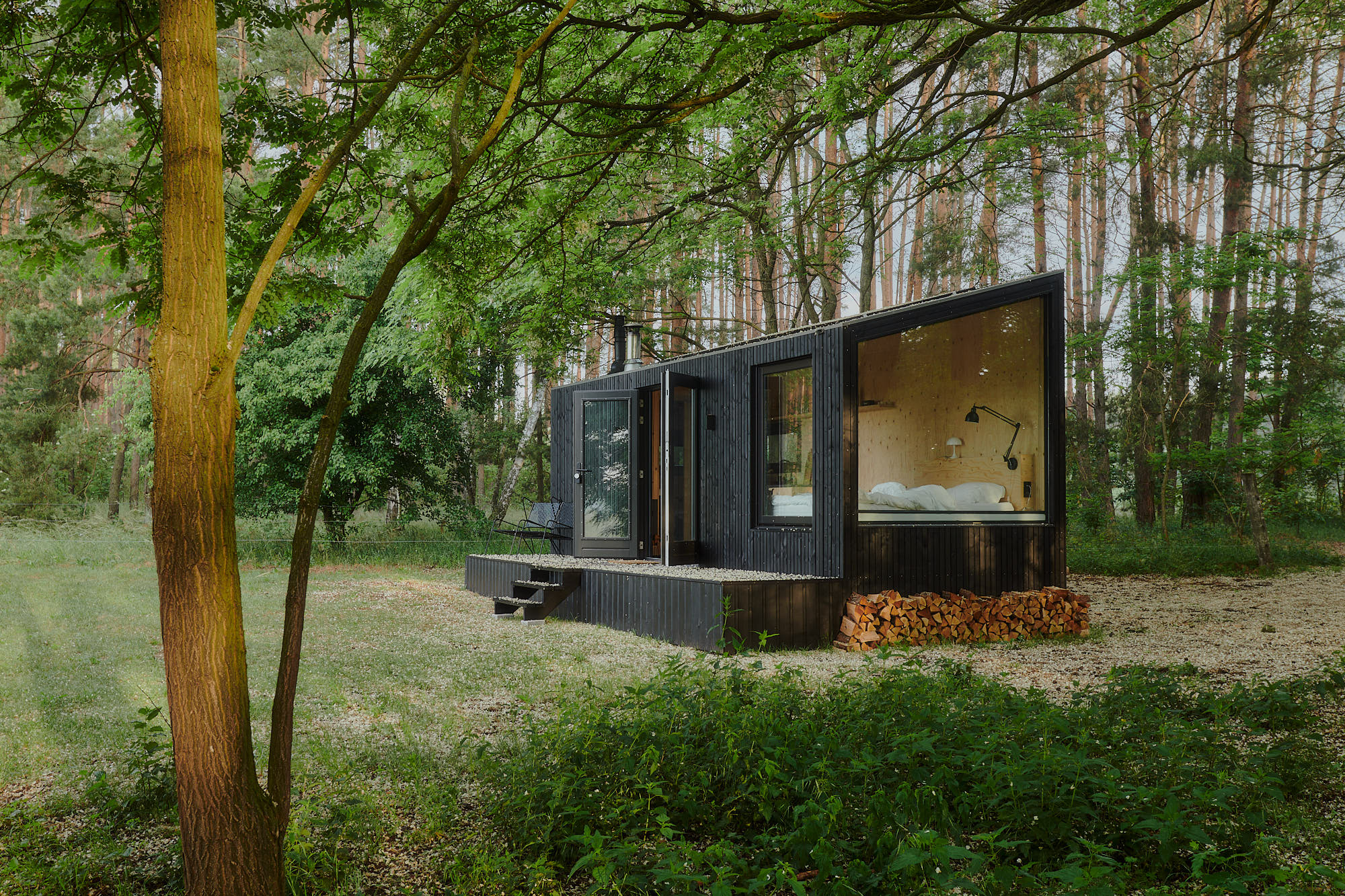
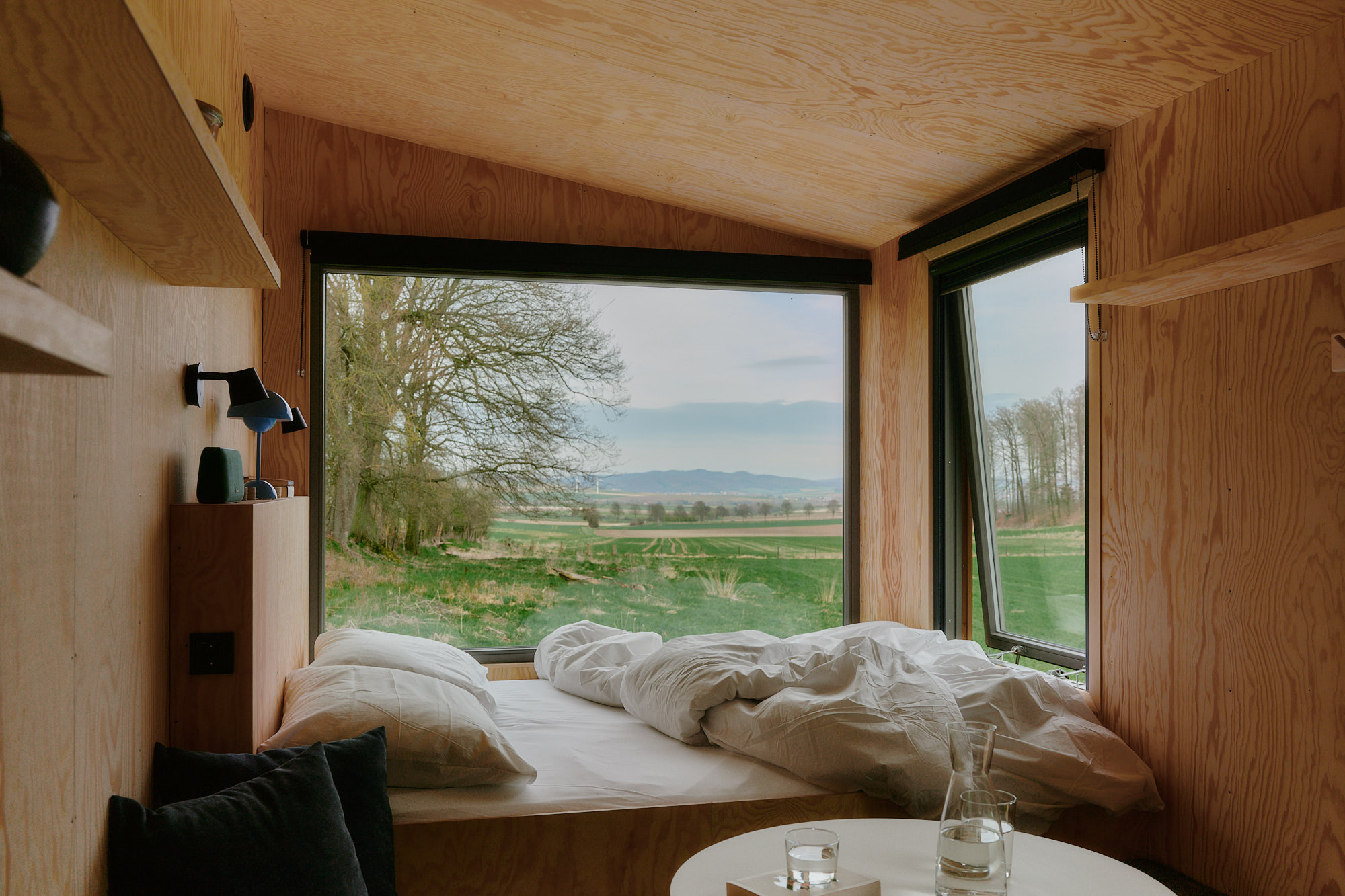
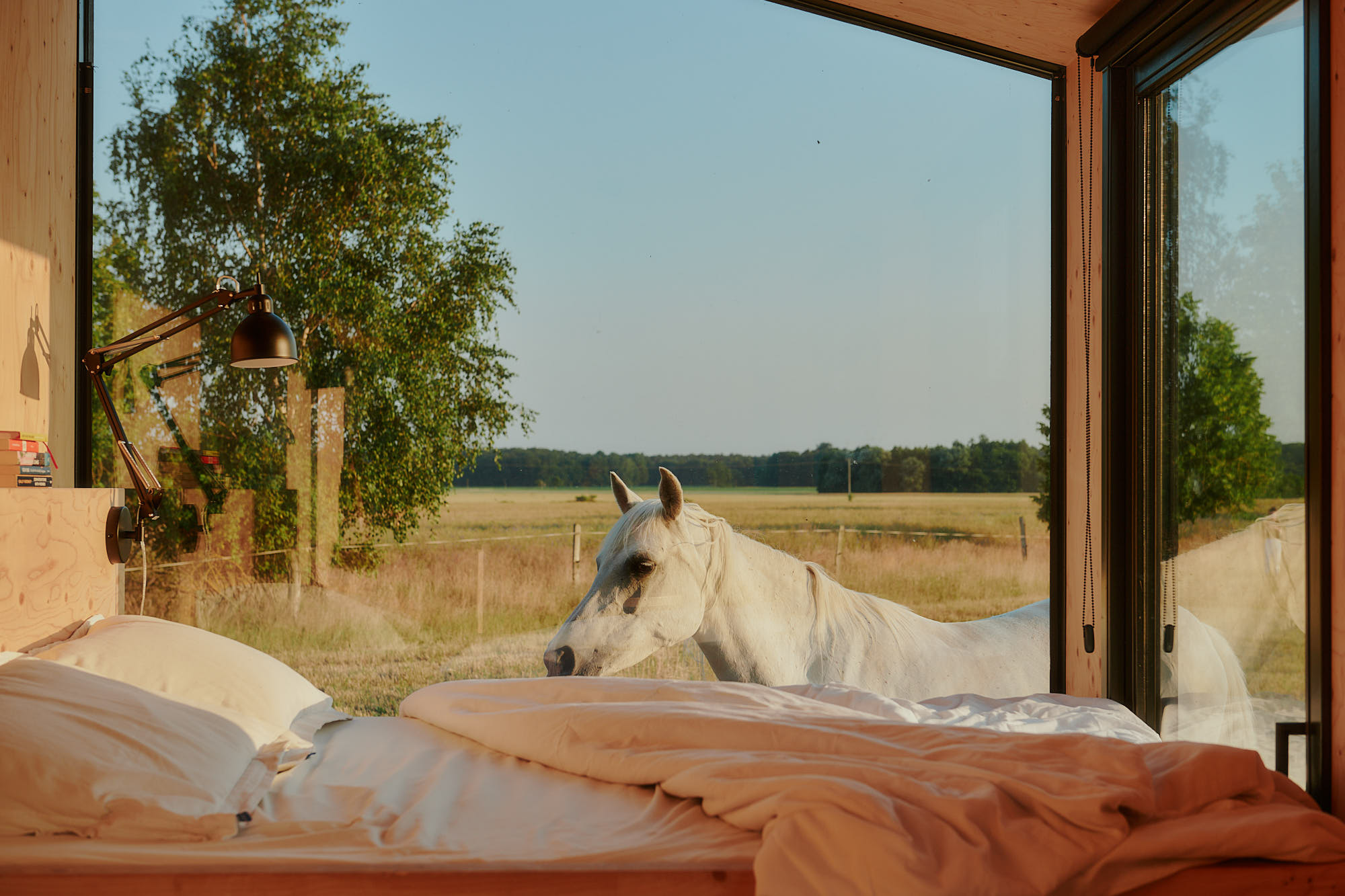
Because a cabin is small, calm and pared back to what you really need, with natural materials, warm wood and nothing that demands your attention. That simplicity has an effect almost immediately: there’s less to think about, and your mind starts to slow down. Every cabin is designed around wide nature views, so the landscape becomes the main feature of the room. You wake up to a meadow or a forest edge, you watch the weather change, maybe a deer walks past.
What has surprised you most since you launched?
Two things. First, how many of our guests don’t come from big cities at all. We built RAUS with stressed-out Berliners and Hamburgers in mind, yet today almost half of our guests live in smaller towns or rural areas themselves. Second, how much the hosts matter. We thought of our landowners as partners who simply lend us a beautiful spot. It turned out that the farmer who waves from the tractor or drops off fresh eggs is often what guests remember most – so we’ve made that personal touch an even bigger part of how we work.
Their Approach
How do you choose a location, and what makes a spot right for a RAUS cabin?
It starts with one question: would you happily sit here for two days and do nothing? If the answer is yes, we look closer. A good RAUS spot has an open view – a field, a lake, the edge of a forest. It should be one to two hours from a city, because a getaway that takes half a day to reach stops being spontaneous. And it needs the right host: usually farmers or foresters who care about their land and want to share it. Many of them apply to us directly with a spot in mind. We visit every place in person before deciding, and we only reveal the exact address after booking, so these places stay as quiet as we found them.
What does sustainability look like in practice for you when it comes to energy, water, materials and waste?
Energy comes from solar panels on the roof and is stored in batteries we can monitor from our office; in the darker months we can top them up if the sun doesn’t deliver enough. Water comes from a fresh tank that is refilled before every stay, and the toilets are dry toilets, so no drinking water gets flushed away. The cabins are timber-built with FSC-certified wood and insulated with natural materials like sheep’s wool or flax, and they sit on wheels, so they can be moved any time and the land stays intact. On waste, the best approach is not creating it in the first place: natural cosmetics in resource-saving packaging and furnishings made to last.
How do you balance sustainability with comfort, so guests don’t feel they’re giving something up?
We never saw it as a trade-off. The question was always: what does someone need to feel genuinely looked after? A really good bed, warm linen, a proper shower, a kitchen you actually want to cook in, a cabin that stays cosy in January. Those things aren’t up for negotiation. Most of the sustainability happens where guests don’t see it – in the construction, the materials and the energy system. What they do notice is the big window and the quiet. In our experience, people don’t feel they’ve given something up when what they’ve left behind is noise.
What did you deliberately leave out of the cabins, and why?
The television, first and foremost – and anything else that competes with the window for attention. We also left out clutter: decorative extras, a dozen gadgets, a binder full of house rules. A cabin of around 16 square metres forces you to decide what really matters, and that discipline turned out to be a feature. Guests tell us they read again, sleep longer and talk more.

Operations without being on site
How does check-in work?
It’s keyless. Once you’ve booked, everything you need lives in the RAUS Companion, our digital travel guide: directions to the exact spot, how the cabin works and the code for the smart lock. You arrive when it suits you, type in the code and you’re in – no key box, no waiting for someone to meet you. For many guests, that first moment of opening the door on their own to a view nobody else is looking at is when the getaway really begins.
How do you organise cleaning and maintenance for cabins in remote places?
Our hosts are the backbone. At every location, the landowner – often a farming family – takes care of the turnover between stays: fresh linen and towels, cleaning, and a quick check that everything works. Some do it themselves, others bring in local help we organise together. We support them with clear checklists and a digital partner dashboard. On top of that, sensors in every cabin report battery charge, water levels and temperature, so our team in Berlin often spots an issue before a guest would. For bigger repairs, our own cabin team heads out. The principle is simple: local hands for the daily work, central eyes on the bigger picture.
How do you stay in touch with guests before and during their stay?
Before arrival, the RAUS Companion does most of the talking. It shares tips for the region, lets guests add extras like breakfast from the farm shop and answers the practical questions. During the stay, our guest experience team is reachable by chat and phone, and AI helps them handle routine questions faster, so they have more time for the ones that need a human. What we deliberately avoid is pinging people. Someone who came to switch off doesn’t want five “How is everything?” messages. We’re there when they need us – otherwise we let them be.
Which tools or routines save you the most time?
Remote monitoring saves us more trips than anything else – knowing that a battery is running low or a tank is nearly empty before the next guests arrive. Second, standardised checklists: every host follows the same steps at every turnover, which keeps quality consistent across a hundred cabins in very different places. Third, automating everything around the booking, so confirmations, access codes, arrival details and extras reach guests without anyone typing an email. And one routine that has nothing to do with software: we still read guest reviews ourselves. It’s the quickest way to see what needs fixing.
Lessons for any host
If a regular apartment or holiday home owner wanted to apply one RAUS idea tomorrow, what should it be?
Remove the friction between arriving and relaxing. Walk through your own place as if you were a guest turning up tired at nine in the evening. Can you get in without a phone call? Can you find the light switches? Is there coffee for the first morning? Every small moment of confusion eats into the holiday. Fix those, and the stay begins the minute the door opens – which is exactly what guests remember and write about afterwards.
What sustainable changes are easy and affordable for any host to make?
Start with what guests touch every day. Swap single-use toiletries for good dispensers you refill. Buy fewer, better textiles – linen and towels that last years instead of seasons. Switch to a green electricity tariff, which is often just a few clicks. Fit a water-saving shower head. And make consumption visible in a friendly way: a short note on how the heating works best, or where the nearest farm shop is, nudges guests further than any list of rules. None of this costs much, and guests notice the care behind it.
How can hosts create a stronger sense of place, even in a city apartment?
Let the neighbourhood into the apartment. Use objects made nearby: a mug from a local ceramicist, a print by an artist from the area, bread from the bakery around the corner waiting on arrival. Write a personal list of the places you actually go to yourself, not the ones every guidebook mentions. And connect guests with people: the café owner, the woman at the market stall. At RAUS, the extras we create with our hosts – a farm breakfast, an alpaca walk, a coffee tasting – do exactly that. In a city you can do the same on a smaller scale. A place stops feeling generic the moment it tells you where you are.
One thing every rental should remove?
The TV in the bedroom. Give that wall back to a window, a bookshelf or nothing at all.
One thing worth investing in?
The bed. Guests forgive a lot, but never a bad night’s sleep.
In conclusion
You don’t need a meadow, a solar roof or a fleet of cabins to apply what RAUS has learned. The heart of their approach is simple: take away the friction, automate the routine work, and spend your time on the moments guests actually remember.
That’s exactly what Smoobu is built to help with. Automated messages send booking confirmations, check-in details and access codes at the right time, without you typing a single email. Smart lock integrations make keyless check-in easy, so guests can let themselves in whenever they arrive. And with all your bookings and channels in one place, you get the same “central eyes on the bigger picture” that RAUS relies on, whether you manage one property or twenty-five.
Ready to Streamline Your Vacation Rental Business?
Start optimizing your hospitality operations today with a free 14-day Smoobu trial.